
How to Invest in US AI Stocks from India: The Latest Guide (LRS, Fractional Shares & Taxes)
Many of the world’s biggest AI companies — NVIDIA, Microsoft, Google, and more — are listed in the United States. The good news is that, as an Indian resident, you can legally invest in them. Here is a simple, step-by-step guide to how it works, what it costs, and the tax rules you must follow.
If you don’t have time to read, then listen to a podcast.
[ez-toc]
Yes, you can invest in US stocks from India — legally
If you have read our earlier articles on the types of AI companies and the bubble-versus-growth debate, you may be wondering one practical thing: most of these companies are listed in the US, so how can someone in India actually invest in them?
The answer is straightforward. Indian residents are allowed to invest in foreign shares under the Reserve Bank of India’s Liberalized Remittance Scheme, commonly abbreviated as LRS. Under this scheme, each person can send up to 250,000 US dollars abroad per financial year for permitted purposes, including the purchase of foreign shares. The process is fully legal, and several regulated platforms now make it simple.
This guide explains the whole journey in plain English — the five steps, the costs, and the taxes — so you can decide whether it is right for you.
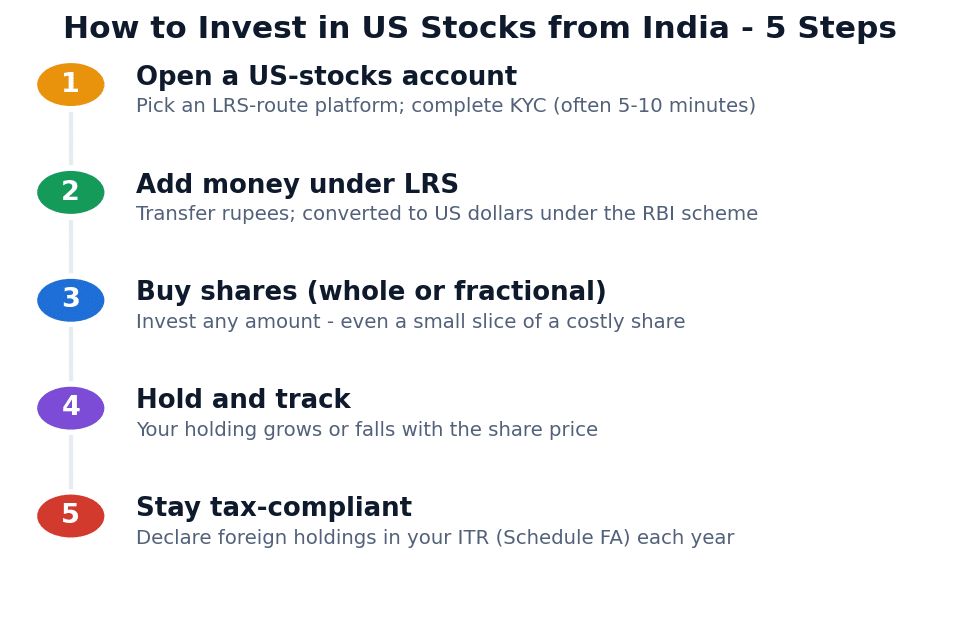
Figure 1: The five basic steps to investing in US shares from India. Each step is explained in detail below.
The 5 steps, explained
Step 1 — Open a U.S. stocks account. Choose a platform that offers US investing through the LRS route. Indian apps such as INDmoney, Vested, and Winvesta are popular options, and some international brokers also serve Indian residents. You will complete a one-time KYC (identity check), which typically takes only 5 to 10 minutes. Compare account-opening charges, currency-conversion fees, and brokerage fees before you pick one.
Step 2 — Add money under LRS. You transfer rupees from your Indian bank account, which are then converted into US dollars and moved abroad under the LRS scheme. Keep your total foreign remittances within the 250,000-dollar yearly limit across all purposes and banks.
Step 3 — Buy shares, whole or fractional. This is the part many Indians find surprising. Some US shares cost hundreds of dollars each, but you do not have to buy a full share. Through “fractional” investing, you can buy a small slice — often from as little as one dollar. So even a costly share becomes affordable, and your slice rises or falls with the full share price.
Step 4 — Hold and track. Once you own the shares, you can hold them for the long term and track their value in the app. You can usually buy more over time, including small regular amounts, which is a disciplined way to invest.
Step 5 — Stay tax-compliant. This step is important and often missed. You must declare your foreign shares in your Indian income-tax return every year, in the section called Schedule FA. There is no minimum size below which you can skip this — even a few dollars must be declared. We cover the tax details next.
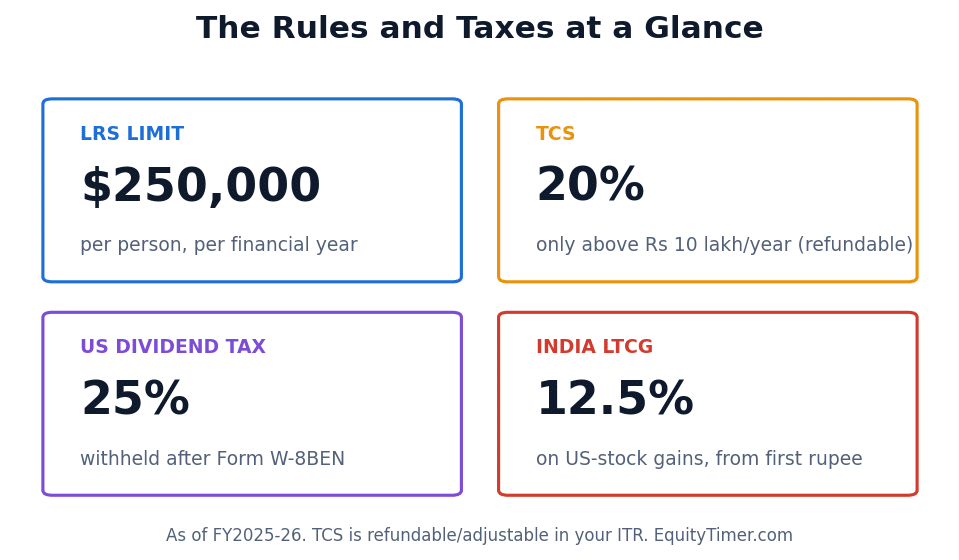
Figure 2: The key rules and tax rates for Indian investors buying US shares, as of FY2025–26.
The costs and taxes you must know
Investing abroad has a few extra costs and rules that you will not face with Indian shares. None of them is difficult, but you should understand them before you start.
- The LRS limit. You can send up to 250,000 US dollars abroad per person, per financial year. For most retail investors, this is far more than enough.
- TCS (Tax Collected at Source). When you send money abroad, a tax called TCS may apply. As of the current rules, there is no TCS on remittances up to 10 lakh rupees in a financial year. Above 10 lakh, a 20 percent TCS applies only to the excess. Importantly, TCS is not an extra tax you lose — it is an advance tax that you can claim back or adjust against your total tax when you file your return.
- Dividend tax. If a US company pays you a dividend, the US usually withholds 25 percent for Indian investors, after you submit a simple form called W-8BEN. Under the India–US tax treaty, you can generally claim a tax credit in India to avoid double taxation.
- Capital gains tax in India. When you sell US shares at a profit, the gain is taxed in India. Long-term gains on foreign shares are taxed at 12.5 percent, and this applies from the very first rupee of gain — the special exemption that applies to Indian shares does not apply here. Short-term gains are added to your income and taxed at your normal slab rate.
- Currency movement. Your returns also depend on the rupee-dollar rate. If the rupee weakens against the dollar, that can add to your returns; if it strengthens, it can reduce them.
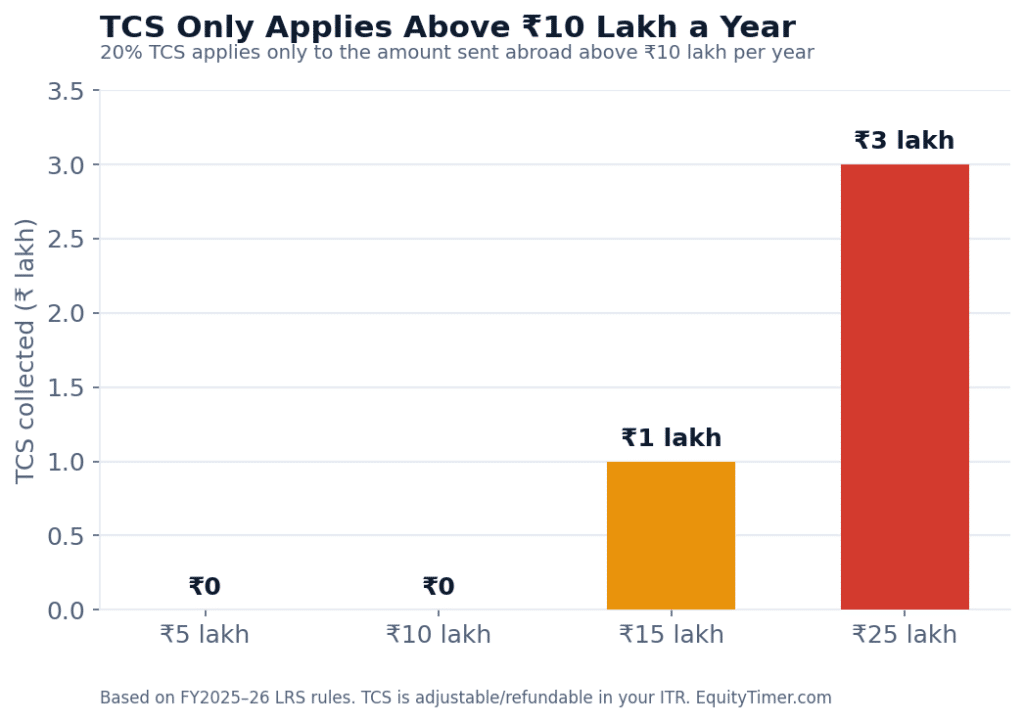
Figure 3: TCS applies only to the amount you send abroad above 10 lakh rupees in a year — and it is refundable or adjustable in your tax return. Based on FY2025–26 rules.
A quick cost checklist before you invest
Different platforms charge differently. Before you choose one, compare these points side by side.
| What to check | Why it matters | Typical range |
| Account opening | One-time cost to start | Often free |
| Currency conversion (FX) | Charged each time you add money | A small % markup |
| Brokerage per trade | Charged when you buy or sell | Flat fee or zero |
| Withdrawal fee | Charged to bring money back | Varies by platform |
| Minimum investment | Lowest amount you can start with | From about $1 |
Table 1: A simple checklist for comparing US-investing platforms. Figures vary by provider; always read the current fee schedule before investing.
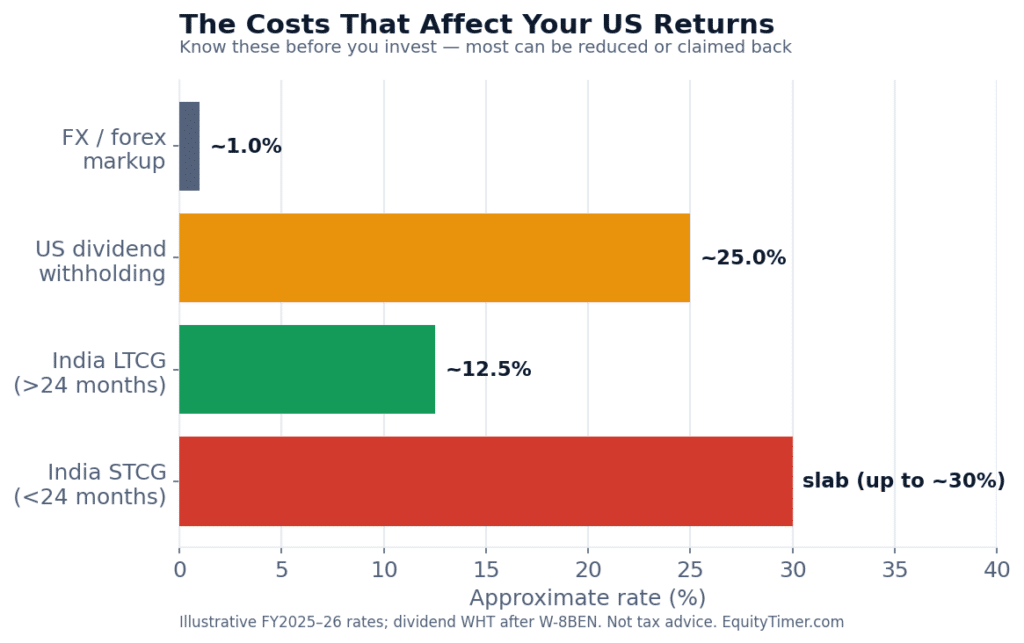
Figure 4: The main costs that can reduce your real returns when investing abroad. Keeping these low matters over the long run.
A simple, sensible way to start
If you decide this is right for you, a calm and steady approach usually works best. Start small so you can learn how the platform and the tax process work with minimal risk. Many investors prefer to invest a small, fixed amount regularly rather than a large sum at once, which helps smooth out the ups and downs of both share prices and the currency.
Keep good records of every purchase and sale, because you will need them for your tax return. And remember the lesson from our earlier articles: understand the business you are buying and check that it earns real cash, rather than buying only because a company’s name is in the news.
Investing abroad is a powerful way to own a piece of the global AI story. Done carefully, compliantly, and for the long term, it can be a valuable part of a diversified portfolio.
The rest of this series
Part 1 — The 5 Types of AI Companies. Where the money flows, layer by layer.
Part 2 — AI Bubble or Real Growth? The cash-flow, spending, and debt data behind both sides.
Frequently Asked Questions (FAQ)
Is it legal to invest in US stocks from India?
Yes. Indian residents can legally invest in US shares under the Reserve Bank of India’s Liberalized Remittance Scheme (LRS), which allows up to 250,000 US dollars per person per financial year for permitted purposes, including foreign shares.
How much money do I need to start?
Very little. Thanks to fractional investing, many platforms let you start with as little as about one US dollar (roughly a few hundred rupees), so you can own a small slice of even a high-priced share.
What is TCS, and will I lose that money?
TCS is a tax collected when you send money abroad. There is no TCS up to 10 lakh rupees per year; above that, 20 percent applies only to the excess. It is not lost — it is an advance tax that you can claim back or adjust against your total tax when filing your return.
Do I have to pay tax on US shares in India?
Yes. Profits are taxed in India. Long-term gains on foreign shares are taxed at 12.5 percent from the first rupee, and short-term gains are taxed at your slab rate. US dividends are subject to a 25 percent withholding tax, for which you can usually claim a credit in India under the tax treaty. You must also declare foreign holdings in Schedule FA of your ITR.
Can I buy NVIDIA or other AI shares directly?
You can buy any listed US company, including large AI-linked names, through these platforms. Remember that some leading AI labs, such as OpenAI and Anthropic, are private and not listed, so they cannot be bought directly. This article is for education only and is not a recommendation to buy any specific share.
Disclaimer
EquityTimer is an educational resource and is not registered with SEBI as an investment adviser. Nothing in this article is investment, tax, or legal advice, nor a recommendation to buy, sell, or hold any security or to use any particular platform. Platform names are mentioned only as examples. Rules, limits, and tax rates are as understood for FY2025–26 and may change; please verify the current rules. Please do your own research and consult a SEBI-registered adviser and a qualified tax professional before investing.